
Gardens & Drainage · Problem & repair
A sloping garden you cannot actually use
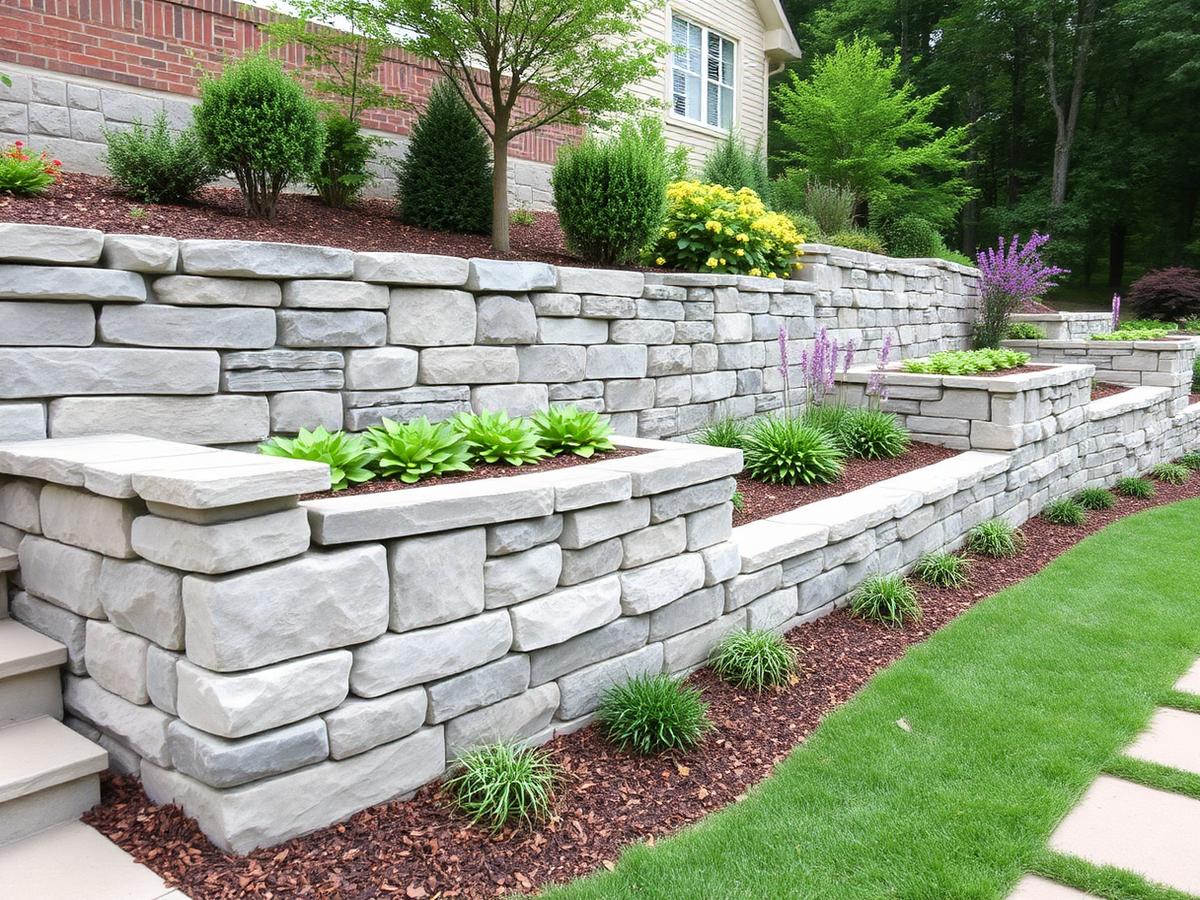
A slope is not a problem to be removed - it is levels to be organised. The moment a garden is split into two or three flat terraces it usually becomes more interesting than a flat plot would have been.
The engineering question is what holds the change in level, and where the retained water goes.
How to tell this is your problem
- Nowhere flat enough for a table or trampoline
- Grass difficult and unsafe to mow
- Soil washing down onto paths after heavy rain
- An existing bank slumping or losing planting
- Steps that are steep, uneven or feel unsafe
Repair or replace?
Design the levels first and the planting second. Getting retaining heights, drainage and steps right is what makes a sloping garden work long term.
Repair options, cheapest first
- 01
Terracing
Splitting the slope into two or three level platforms with retaining structures between. The most usable result for family gardens.
- 02
Engineered retaining walls
Retaining structures need proper foundations, drainage behind them and, above certain heights, structural design. This is not a decorative wall.
- 03
Steps and circulation
Comfortable, consistent risers and generous treads make the whole garden usable. Awkward steps are why terraces go unvisited.
- 04
Planted banks
Where a level change does not need to be walked on, deep-rooting planting stabilises the slope at far lower cost than retaining.
Why it happens
Natural topography
Many plots on the sides of valleys and hills simply have a consistent fall front to back or side to side.
Historic cut and fill
Ground moved during original construction is often left as an unengineered bank that continues to move.
Failed or absent retaining
Old sleepers or dry-stacked walls that were never designed to retain will bulge and eventually fail.
Erosion on bare banks
Slopes without stabilising planting lose soil every time it rains heavily.
Cost and time on site
Indicative cost
Retaining is the significant cost and rises quickly with height. Terracing budgets are dominated by walls, drainage and muck-away.
Typical duration
A terraced garden project is typically one to three weeks depending on scale and access.
Every quote is priced after seeing the site. Send photos and rough levels and we will sketch how many terraces the slope wants.
Steep or sloping garden: common questions
- Do retaining walls need building regulations approval?
- It depends on height, surcharge and location. Anything substantial, near a boundary or retaining a driveway should be checked and designed properly.
- Do sleepers make good retaining walls?
- For low changes with proper posts and drainage, yes. For higher retaining they are frequently under-specified and will lean over time.
- Why does my retaining wall bulge?
- Usually water pressure behind it. Retaining structures need drainage and free-draining backfill, or hydrostatic pressure does the damage.
- What is a comfortable step riser outdoors?
- Outdoor steps generally feel best with a shallower riser and a deeper tread than indoor stairs, kept consistent across the whole flight.
Services that fix this
Ready to transform your outdoor space?
Free site visits and no-pressure quotes within a 30-mile radius of Ash Vale - covering Surrey, Hampshire and Berkshire.