
Driveways · Problem & repair
Driveway flooding and standing puddles
Standing water is not just a nuisance - it is the single biggest cause of premature driveway failure, because everything that goes wrong underneath starts with water getting in.
There are only three ways to deal with it: send the water somewhere, let it soak through, or re-shape the surface so it never collects.
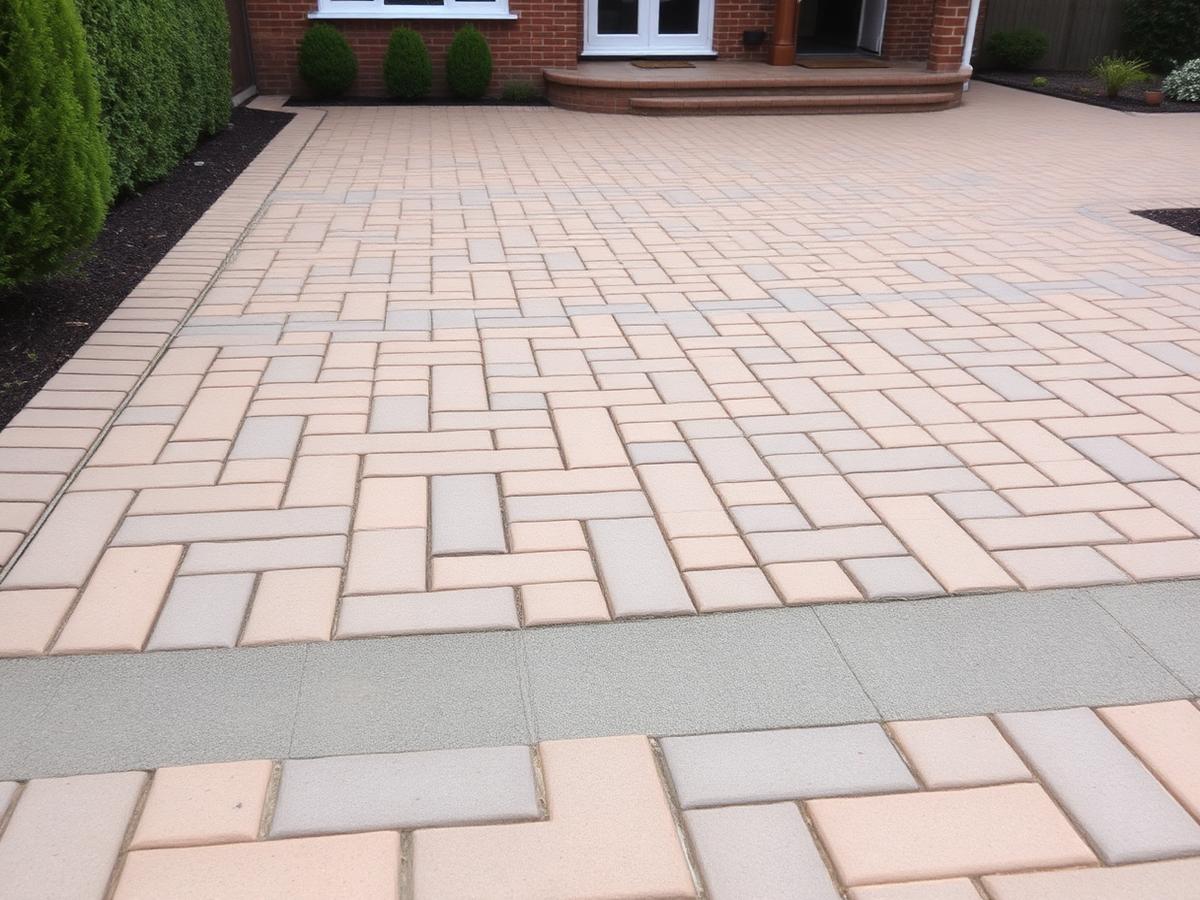
How to tell this is your problem
- Puddles that persist for hours after rain stops
- Water running towards the house or garage threshold
- Silt or debris lines showing where water settles
- Ice forming in the same patch every winter
- Green algae growth in the low spot
Repair or replace?
Solve the water before spending anything on the surface. A new driveway laid over an unresolved drainage problem fails in the same place as the old one.
Why it happens
Insufficient fall
A driveway needs a deliberate slope. Laid dead level or with a reverse fall, water has nowhere to go and finds the lowest point.
No threshold drainage
Where a drive slopes towards a garage or front door, a channel drain across the threshold is essential. Without it the building takes the water.
Blocked or missing outlet
Existing gullies silt up, or a channel drain was fitted with no proper connection and simply fills.
Impermeable surface with nowhere to drain
A sealed surface with no soakaway, permeable margin or lawn to discharge onto will pond by design.
Repair options, cheapest first
- 01
Re-grade the surface
On block paving the surface can be lifted and re-screeded to a correct fall - often the cleanest fix because it uses the existing materials.
- 02
Channel or ACO drain
A linear drain across the threshold or at the low point, connected to a soakaway or approved outfall. The connection matters more than the channel.
- 03
Soakaway
A crated or rubble-filled pit sized to the catchment area, sited the required distance from buildings, taking run-off away from the surface.
- 04
Permeable surfacing
Resin-bound or permeable block with a matching open-graded sub-base lets water through rather than moving it. Usually the simplest route to compliance on a new install.
Cost and time on site
Indicative cost
Adding a channel drain and outfall is a defined day or two of work. Full permeable re-surfacing is priced as a new driveway.
Typical duration
Drainage retrofits are typically one to three days depending on the outfall route.
Every quote is priced after seeing the site. We survey the fall and outfall before quoting - no surface work over an unsolved drainage problem.
Driveway flooding & puddles: common questions
- Do I need planning permission for a new driveway?
- In England, a front driveway over five square metres generally needs either a permeable surface or drainage to a permeable area within the property, otherwise planning permission applies. Always confirm with your local authority.
- What fall should a driveway have?
- Roughly 1 in 60 to 1 in 80 away from the property is the usual working target - enough to shed water, not enough to notice.
- Can I just drill holes in the surface?
- No. Without a receiving void beneath, holes move water a few centimetres and then it sits in the base, which is worse than surface ponding.
- Is resin always permeable?
- Resin-bound is permeable when laid over a permeable base. Laid over sealed concrete, the water still has nowhere to go.
Services that fix this
Landscaping
Full back-garden transformations - patios, lawns, planting and lighting.
Block Paving Driveways
Block paved driveways laid on a proper Type 1 sub-base with kerb restraint.
Resin Driveways
Resin-bound driveways over a properly prepared permeable base.
Related reading: Resin vs Block Paving in Surrey: Which Lasts Longer?
Ready to transform your outdoor space?
Free site visits and no-pressure quotes within a 30-mile radius of Ash Vale - covering Surrey, Hampshire and Berkshire.