
Patios & Paving · Problem & repair
A patio that is too small, too shaded or in the wrong place
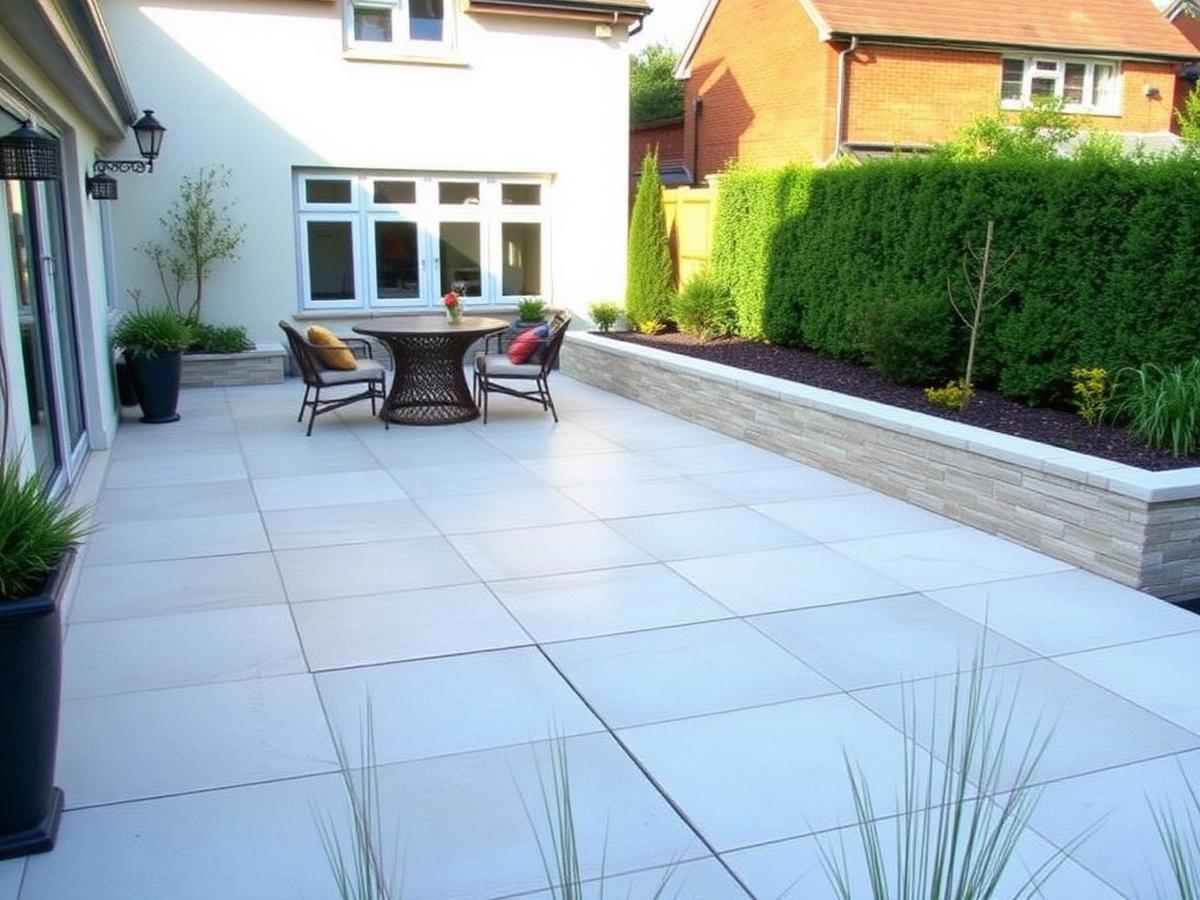
Plenty of patios are perfectly well built and almost never used. Usually that comes down to two things: it is too small for a table with chairs pulled out, or it is in shade at the time of day people actually want to sit outside.
Both are solvable, and often without removing what is already there.
How to tell this is your problem
- Chairs sitting half on the grass when pulled out
- The space in shade by early afternoon
- Furniture permanently stored elsewhere
- No sheltered spot when there is any wind
- A long, narrow strip rather than a usable square
Repair or replace?
Extend rather than replace wherever the existing slabs are sound - the material cost of removal buys a lot of new terrace.
Why it happens
Default siting against the house
The back wall is the easiest place to lay a patio, not necessarily the sunniest or most sheltered.
Undersized dimensions
A six-seat table needs meaningfully more space than the table footprint - roughly a metre of clearance on each usable side.
Aspect not considered
North-facing rear walls put the patio in shade for much of the day, particularly outside high summer.
No wind shelter
Open, exposed terraces feel cold even in sun, so they go unused for most of the season.
Repair options, cheapest first
- 01
Extend the existing area
Adding to a sound patio in a matching or deliberately contrasting material is usually cheaper than removal and re-lay.
- 02
Add a second seating terrace
A smaller, sunnier terrace elsewhere in the garden, linked by a path, often gets far more use than the one by the house.
- 03
Shelter and screening
Planting, a slatted screen or a pergola turns an exposed area into somewhere you actually sit.
- 04
Change the level
Raising or sinking a terrace by a step can create shelter and definition without extra footprint.
Cost and time on site
Indicative cost
Extensions and new terraces are priced per square metre by material; linking paths and steps are quoted separately.
Typical duration
A small additional terrace is often three to five days including base and finishes.
Every quote is priced after seeing the site. We design the terrace around where the sun actually is - not just where the back door is.
Patio in the wrong place: common questions
- How big should a patio be for a table and chairs?
- As a working rule, allow around a metre of clear space beyond the table on each side people will use, so chairs can be pulled out onto paving.
- Can a new patio be matched to an old one?
- Matching weathered stone exactly is difficult. A deliberate contrast - a different but complementary material - usually looks better than a near-miss.
- Does a patio need to be next to the house?
- Not at all. Following the sun and shelter often produces a much more usable space further down the garden.
- Do I need permission to lay a patio?
- Domestic patios are typically permitted development, but raised terraces and anything affecting drainage or overlooking can be different. Check with your local authority.
Services that fix this
Related reading: Porcelain vs Sandstone: Which Patio Material Wins?
Ready to transform your outdoor space?
Free site visits and no-pressure quotes within a 30-mile radius of Ash Vale - covering Surrey, Hampshire and Berkshire.