
Driveways · Problem & repair
Faded, patchy or blotchy block paving colour
Three completely different things get described as fading: a white bloom that appears in the first year, a gradual loss of pigment over a decade, and a grey film of ingrained dirt.
Only one of those is permanent, and it is not the one most people worry about.
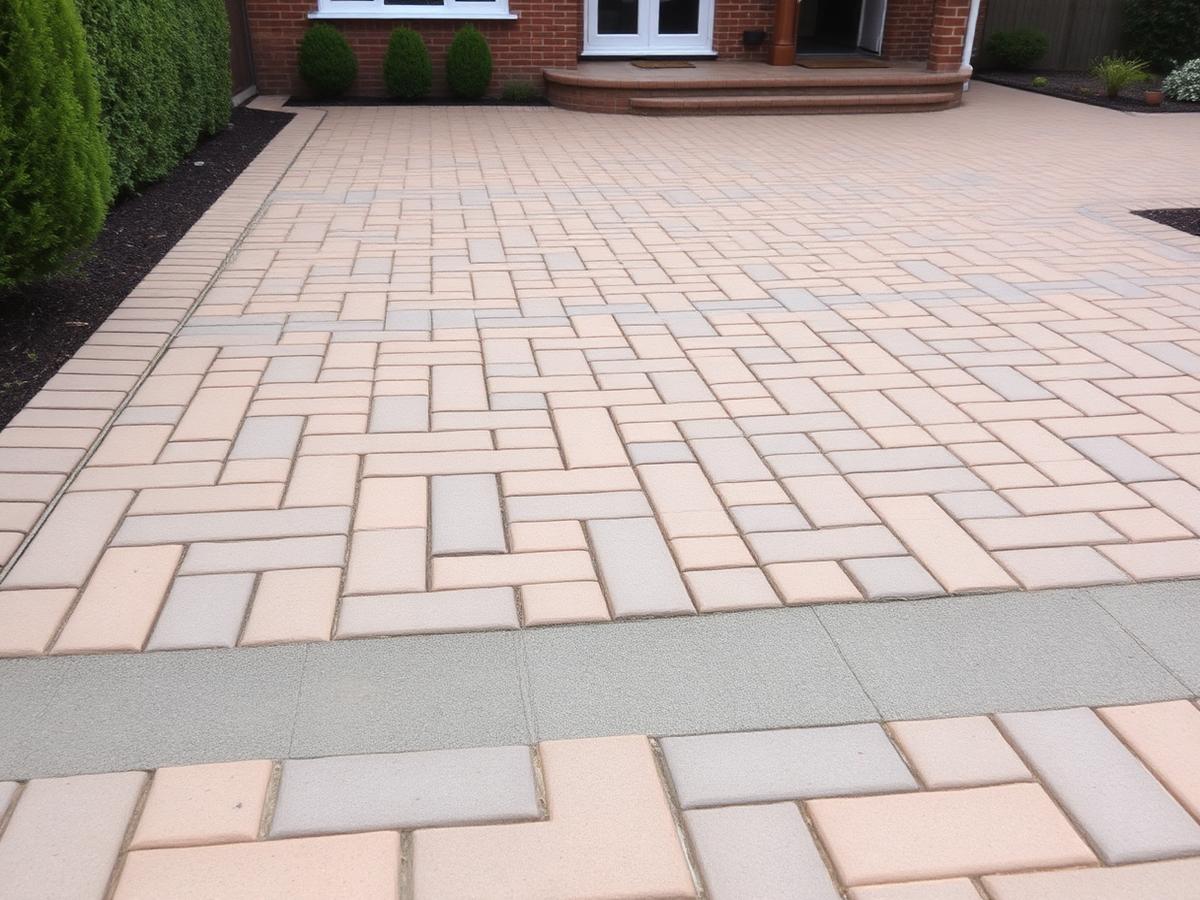
How to tell this is your problem
- White chalky bloom on new-ish paving
- Uniform greying across the whole drive
- Dark patches under trees and light patches in sun
- Colour returning briefly when the surface is wet
- Newer replacement blocks looking obviously different
Repair or replace?
This is nearly always cosmetic. Clean first and judge the colour afterwards - most drives look years newer before any sealer is considered.
Why it happens
Efflorescence
Free lime migrating to the surface of concrete blocks and reacting with air. It looks alarming on new paving and weathers away naturally over months.
UV pigment fade
Concrete pigments do lose intensity with prolonged sunlight. This is genuine and permanent, though usually gradual and even.
Ingrained dirt film
Road dust, tyre rubber and organic matter build a grey layer that reads as fade. Cleaning removes it entirely.
Algae in damp zones
Shaded areas develop a green-black film that makes colour look uneven across the same drive.
Repair options, cheapest first
- 01
Deep clean and re-sand
By far the most common answer. A proper clean removes the film and the original colour reappears, followed by fresh kiln-dried sand.
- 02
Wait out efflorescence
Genuine efflorescence resolves itself with weathering. Aggressive acid treatment often does more harm than leaving it alone.
- 03
Colour-enhancing sealer
A wet-look or colour-boost sealer restores depth to genuinely faded pigment. It needs re-applying periodically and changes the finish, so it is a choice not a repair.
- 04
Rotate and swap blocks
Where a small area has mismatched replacements, shuffling blocks from a less visible zone gives a far better match than new stock.
Cost and time on site
Indicative cost
Cleaning and re-sanding is priced per square metre. Sealing adds a further per-square-metre cost and needs dry weather.
Typical duration
A domestic drive clean is a day; sealing needs a second dry day afterwards.
Every quote is priced after seeing the site. Before replacing anything, let us clean a test area and show you the colour underneath.
Faded block paving colour: common questions
- Will the white bloom on my new paving ever go?
- Efflorescence typically weathers off over the first year or two of rain and sun. It is a normal characteristic of concrete products, not a defect.
- Does sealing stop colour fading?
- It slows dirt ingress and deepens the current colour. It does not stop UV acting on the pigment over the long term.
- Can faded blocks be turned over?
- Some blocks are laid face-up only, so flipping is rarely an option. Relocating blocks from a hidden area is the practical version of that idea.
- Why do my replacement blocks stand out?
- Manufacturing batches vary and existing paving has weathered. Blending new blocks in scattered across an area reads far better than one solid patch.
Services that fix this
Ready to transform your outdoor space?
Free site visits and no-pressure quotes within a 30-mile radius of Ash Vale - covering Surrey, Hampshire and Berkshire.