
Driveways · Problem & repair
Oil and fuel stains on a driveway: what lifts and what does not
The realistic outcome depends almost entirely on the surface. Oil sits on top of sealed concrete block, soaks into porous stone, and chemically softens tarmac binder.
Knowing which of those three you are dealing with saves a lot of scrubbing that was never going to work.
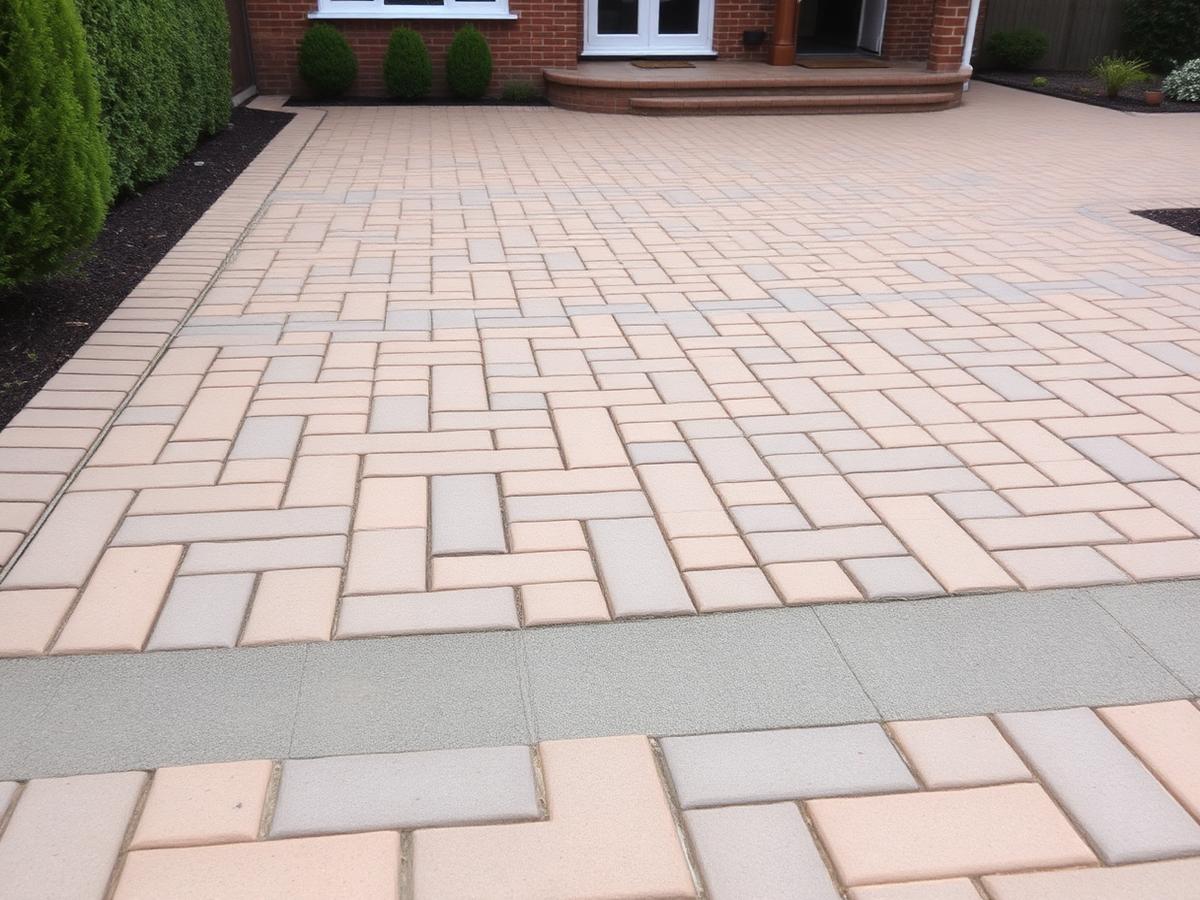
How to tell this is your problem
- Dark patch under the usual parking position
- A soft, tacky area on tarmac where fuel has sat
- Rainbow sheen after rain
- Stain edges spreading outwards over months
- Cleaning lifts the surface colour but not the mark
Repair or replace?
Never replace a driveway over staining. On tarmac, however, fuel damage that has gone soft and crumbly is a genuine repair - the binder is gone and that patch needs cutting out.
Repair options, cheapest first
- 01
Absorb first, clean second
Fresh spills should be covered with cat litter, sand or a proprietary granule to draw oil out before any water touches it. Washing first drives the oil deeper.
- 02
Degreaser and hot wash
An alkaline patio degreaser left to dwell, agitated with a stiff brush, then rinsed. Repeat cycles work better than one aggressive attempt.
- 03
Poultice treatment
For natural stone, a poultice paste draws oil back out of the pores over 24-48 hours. Slow but the only method that reaches deep staining.
- 04
Swap the affected blocks
On block paving, replacing the stained blocks with spares is quick and gives a genuinely clean result. Worth keeping a few spares back from any new install.
Why it happens
Engine and gearbox drips
Slow leaks concentrate in one spot over months, so the oil penetrates rather than sitting on the surface.
Diesel and petrol spills
Fuel is the damaging one on tarmac - it dissolves the bitumen binder and leaves the stone loose.
Hydraulic fluid from skips or plant
Deliveries and skip drops are a common one-off cause and often go unnoticed until the mark appears.
Porous, unsealed surfaces
Natural stone and unsealed concrete draw oil in by capillary action, which is why late cleaning rarely works.
Cost and time on site
Indicative cost
Degreasing is a low-cost visit. Block swaps depend on availability of a matching block, which is easier on recent installs.
Typical duration
Most stain treatments are a few hours. Poultices need to be left overnight and returned to.
Every quote is priced after seeing the site. We will tell you upfront whether a stain will lift or whether a block swap is the better spend.
Oil stains on a driveway: common questions
- Will a pressure washer remove old oil?
- It removes the surface film and usually leaves a lighter halo. Deep-set oil needs a chemical or poultice approach.
- Does sealing prevent oil stains?
- A quality sealer makes spills far easier to lift because they stay on the surface. It reduces staining rather than eliminating it.
- Why has my tarmac gone soft where fuel spilled?
- Petrol and diesel dissolve bitumen. Once the binder is gone the stone has nothing holding it, so that area needs cutting out and re-laying.
- Is bleach a good idea?
- No. It can discolour concrete pigment and damage adjacent planting without addressing the oil itself.
Services that fix this
Ready to transform your outdoor space?
Free site visits and no-pressure quotes within a 30-mile radius of Ash Vale - covering Surrey, Hampshire and Berkshire.