
Driveways · Problem & repair
Crumbling driveway edges and spreading kerb lines
Edges fail first on almost every driveway, and for a simple reason: the outer strip carries load with nothing on one side to push back against.
A driveway is only as stable as its perimeter, so edge repair is often the highest-value work you can do on an ageing surface.
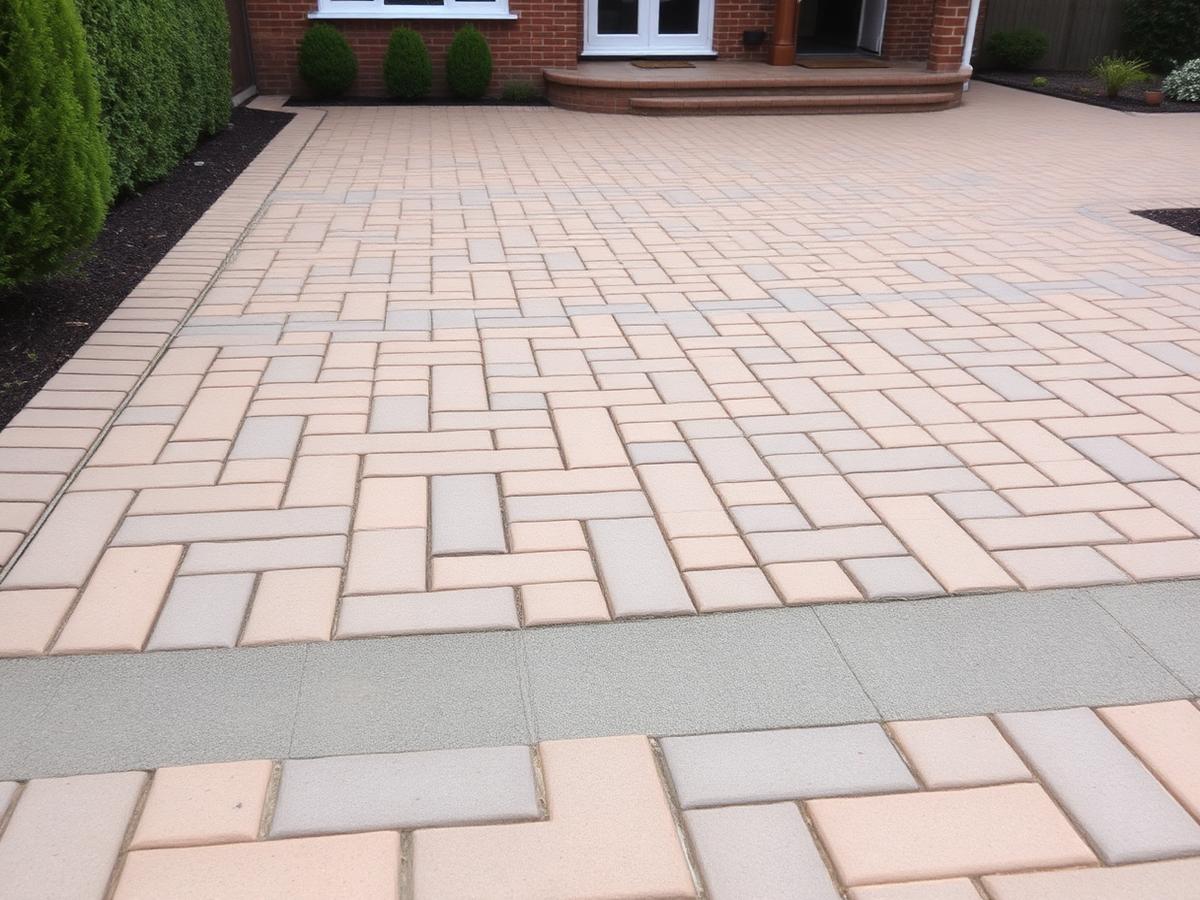
How to tell this is your problem
- Tarmac breaking away in flakes along the boundary
- The edge course of blocks tilting outwards
- A widening gap between the drive and the lawn or path
- Loose material collecting in the border
- The drive feeling narrower than it was
Repair or replace?
Almost always a repair. Getting the edge right can add years to a surface that otherwise looks tired.
Why it happens
No haunching
Edge blocks or kerbs need a concrete haunch behind and beneath them. Bedded on sand alone, they walk outwards under load.
Overrunning the edge
Repeatedly clipping the edge when turning puts the full wheel load onto the weakest strip.
Soft ground alongside
A soft border or flowerbed offers no lateral support, so the edge has nothing to bear against.
Water scouring the perimeter
Run-off concentrating along the edge washes out the bedding from beneath the outer course.
Repair options, cheapest first
- 01
Re-haunch the existing edge
The edge is exposed, cleaned, re-set to line and level, and concrete haunching formed behind it. Uses the existing kerbs or blocks where they are sound.
- 02
Install a new kerb line
Where there is no restraint at all, a proper kerb or edging course is set on concrete along the full perimeter.
- 03
Cut and patch tarmac edges
Failed tarmac is cut back to sound material and re-laid against a new solid edge, so the repair has something to compact against.
- 04
Widen slightly
Where overrun is unavoidable at a turning point, adding 200-300mm of properly built edge often solves the problem permanently.
Cost and time on site
Indicative cost
Edge work is priced by linear metre and is one of the more affordable structural improvements to an older drive.
Typical duration
Most perimeter repairs are one to two days.
Every quote is priced after seeing the site. Edge repairs are quick, affordable and stop a tired drive getting worse.
Crumbling driveway edges: common questions
- Can I just concrete along the edge myself?
- A surface fillet with nothing beneath it cracks off within a season. The haunch has to sit under and behind the edge unit to work.
- Does grass alongside a driveway cause the edge to fail?
- Soft ground offers no restraint, which makes an unhaunched edge fail faster. It is not the grass itself, it is the missing concrete.
- Should the edge sit above or below the surface?
- Generally flush or very slightly proud on the drive side, so water is not trapped and the mower can run past cleanly.
- Is edge repair worth doing on an old driveway?
- Usually yes. If the field of the drive is sound, stabilising the perimeter stops the whole surface relaxing outwards.
Services that fix this
Ready to transform your outdoor space?
Free site visits and no-pressure quotes within a 30-mile radius of Ash Vale - covering Surrey, Hampshire and Berkshire.