
Driveways · Problem & repair
Weeds growing through block paving joints
Almost everyone assumes weeds in a driveway are growing up from the soil beneath. They are not. Seed blows in, lands in the joint, and germinates in the organic silt that collects there.
That single fact changes the whole approach - the fix is about what is in the joint, not what is under the drive.
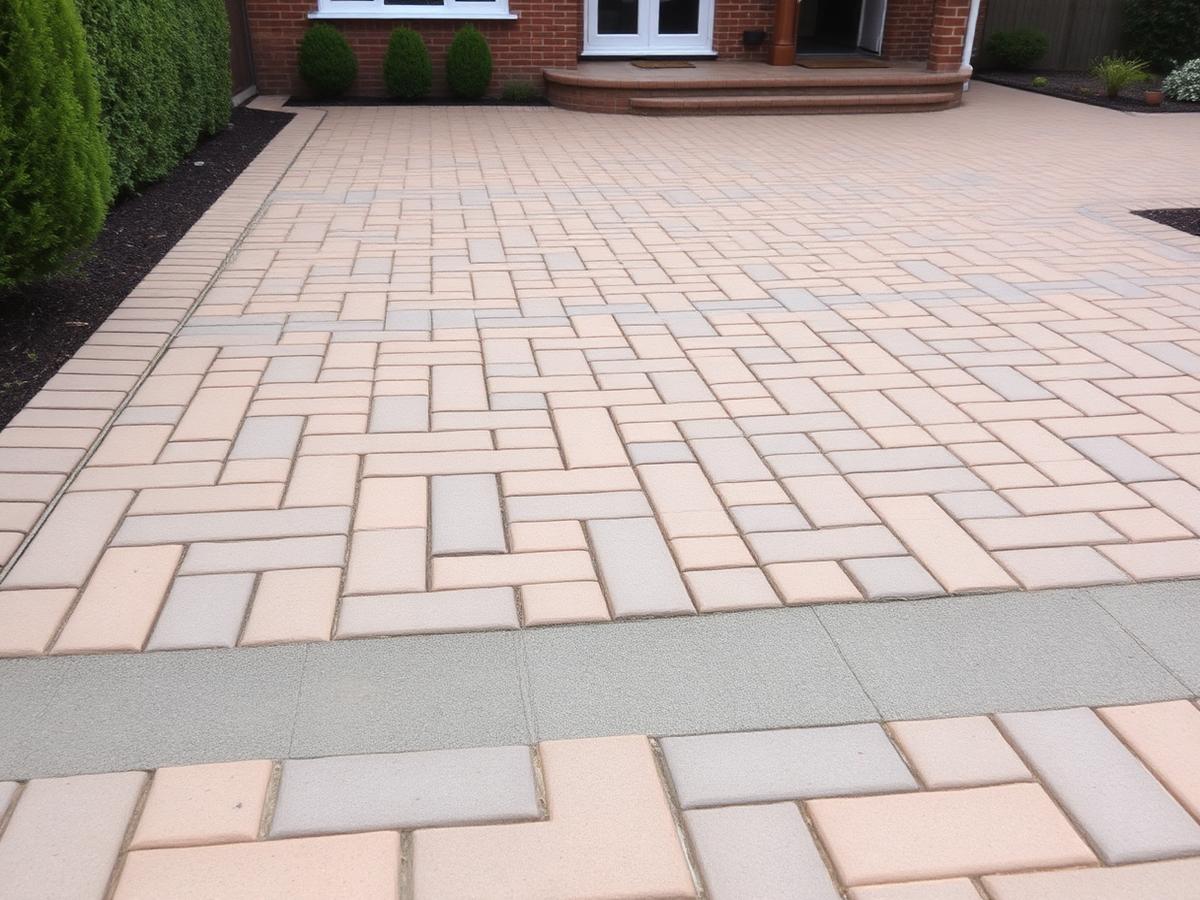
How to tell this is your problem
- Growth confined to the joints, never through the blocks
- Worst along shaded edges and beneath overhanging planting
- Joints looking dark and soil-coloured rather than sandy
- Moss forming in the same lines as the weeds
- Weeds returning within weeks of being pulled
Repair or replace?
This is a maintenance issue, not a construction failure. No driveway needs replacing because of weeds.
Repair options, cheapest first
- 01
Deep clean and re-sand
The joints are cleaned out, the surface washed, and fresh kiln-dried sand brushed and vibrated in. This alone removes the seedbed.
- 02
Polymeric or resin jointing
A jointing compound that sets semi-rigid. It resists washout and gives weeds nothing loose to root into. Costs more than sand and needs a dry day to install.
- 03
Cut back the overhang
Trimming planting back off the drive and letting light and air onto the joints does more than most chemical treatments.
- 04
Fix the drainage
If a section always stays wet, adding a channel or correcting the fall stops the joints composting in the first place.
Why it happens
Empty or contaminated joints
As kiln-dried sand washes out, the gap fills with airborne dust and leaf litter. That is a perfect seedbed.
Overhanging planting
Anything dropping leaves or seed onto the drive feeds the joints. Shade keeps them damp enough to germinate.
Poor surface drainage
Where water lingers rather than running off, the joints stay wet and organic matter breaks down into compost.
Pressure washing without re-sanding
A jet wash blasts the joint sand out. If it is not replaced immediately, the joints refill with whatever blows past.
Cost and time on site
Indicative cost
Cleaning and re-sanding is priced per square metre and is one of the cheapest ways to make an older drive look new. Polymeric jointing is a premium option.
Typical duration
A typical domestic driveway clean and re-sand is one day, weather permitting.
Every quote is priced after seeing the site. A clean and re-sand transforms a tired drive for a fraction of a replacement.
Weeds in block paving: common questions
- Does weed killer work on block paving?
- It kills what is there but changes nothing about the joint, so new seed germinates in the same gap. Treat it as a tidy-up, not a solution.
- Should I pressure wash my block paving myself?
- You can, but keep the lance moving and off a pinpoint setting, and re-sand the same day. An unsanded drive loses stability at the joints.
- Is a membrane under the blocks the answer?
- A geotextile membrane belongs under the sub-base and helps with base stability, not weeds - the seed is arriving from above.
- How often should joint sand be topped up?
- As a rule of thumb, check every couple of years, and always after any pressure washing.
Services that fix this
Ready to transform your outdoor space?
Free site visits and no-pressure quotes within a 30-mile radius of Ash Vale - covering Surrey, Hampshire and Berkshire.